FIFA 2026 Is Coming to Vancouver: What It Means for Our City, Our Homes, and Our Future
FIFA 2026 Is Coming to Vancouver: What It Means for Our City, Our Homes, and Our Future
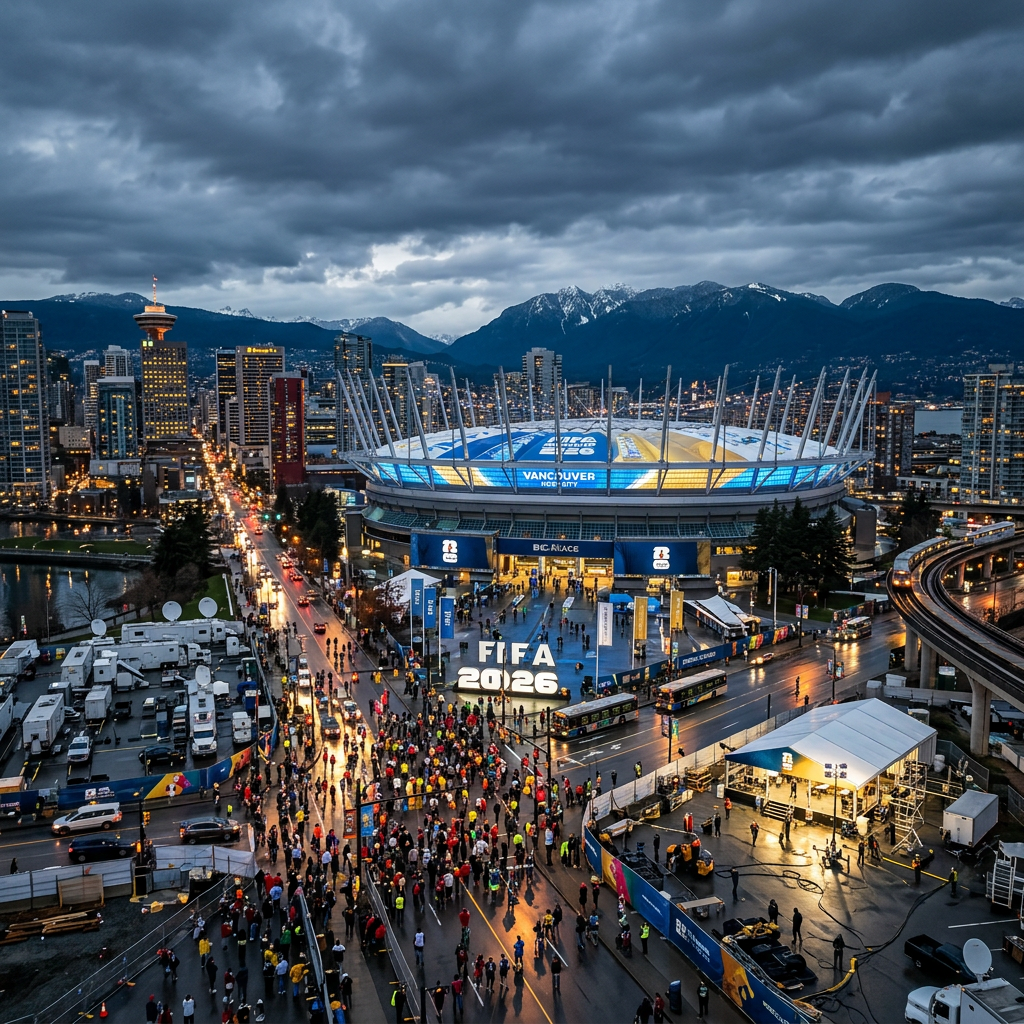
Community News — ESR Electric In under a month, on June 13th, Vancouver steps onto one of the biggest stages in the world. The 2026 FIFA Men's World Cup arrives at BC Place. Seven matches. An estimated 350,000 attendees moving through our downtown core. A projected $1.7 billion in economic activity for British Columbia. This is not just a sports story. For Vancouver residents, business owners, and tradespeople, this is a story about infrastructure, housing, opportunity, and the tension that always exists when a global event lands inside a local community that was already under pressure before the cameras arrived.
The New Bylaws: What Changed and Why
Beginning May 13 and running through July 20, 2026, the City of Vancouver operates under a temporary FIFA World Cup bylaw amending seven existing city bylaws. The changes expand city authority over advertising and signage, street vending and busking, noise enforcement, graffiti removal on public and private property, road closures, traffic management, and public space around venues and fan zones. City officials say these measures meet FIFA's operational, safety, security, and brand protection requirements. For most Vancouverites, day-to-day life will not change dramatically. For businesses in hospitality, retail, food service, and the trades, these weeks require adaptation. Delivery schedules shift. Permit timelines tighten. Worksite access around the stadium district gets compressed. The work is not disappearing. It is bunching.
The Housing Question: Opportunity or Pressure?
The economic upside is real. The provincial government projects more than one million additional out-of-province visitors between 2026 and 2031, driving over $1 billion in tourism spending. Provincial tax revenues projected to rise $88 million during the event and $136 million in the years that follow. But beneath those numbers sit real concerns. Vancouver's rental market is already one of the tightest in Canada. A Deloitte report commissioned by Airbnb projected a shortfall of 70,000 nights during the tournament's busiest nine-day stretch. The provincial government disputed the severity of that figure, saying registered short-term rentals and existing hotel capacity would be sufficient. The truth is probably somewhere in between. What is not disputed is the financial logic at play. With nightly rates during peak demand far exceeding what a long-term tenant pays in a month, the pressure on property owners to pivot toward short-term rentals is real and predictable. Fewer long-term units available. Higher rents. More pressure on the hospitality workers, tradespeople, and service staff who will be working hardest to make the event succeed. We have seen this story before. Global attention arrives fast. Housing tightens faster. And when the final whistle blows, the market rarely resets to where it was. What remains is often a permanently tighter, more expensive rental landscape for the people who actually live and work here year round. BC has short-term rental regulations designed to protect long-term housing supply. The challenge during FIFA will not be policy on paper. It will be enforcement. And whether the financial incentive to open units to visitors overrides the rules designed to keep housing accessible for the people who call this city home. That is the question worth watching.
The Bigger Picture: What Global Exposure Actually Means
Criticism of mega-events is healthy and necessary. But it is worth being honest about what FIFA 2026 actually represents beyond the disruption. Vancouver is being seen. Three hundred and sixty million viewers watch a typical World Cup group stage match. For a city competing globally for investment, talent, and tourism, that exposure is not trivial. It places Vancouver in the same frame as London, Tokyo, and Los Angeles for an audience that may never have considered this part of the world. The infrastructure investment is real. Public spending estimated between $532 million and $624 million across all levels of government funds upgrades to transit, venue facilities, and public space that remain long after the tournament ends. The tourism pipeline extends well beyond 2026. The province treats this as a long-term credibility builder, not a one-and-done event. Cities reveal who they really are under pressure. FIFA 2026 will not just showcase Vancouver to the world. It will test whether the systems underneath the city are strong enough to support the weight of the attention being placed on top of them.
The Trades Perspective: Building the Infrastructure Behind the Headlines
For Vancouver's electrical trades, FIFA 2026 is not abstract. It is compressed schedules. Temporary infrastructure. Tight permitting windows. Higher standards. Work that has to be right the first time because there is no margin for rework when the world is watching on a fixed date. BC Place requires significant electrical and infrastructure preparation. Surrounding venues, fan zones, and hospitality spaces need temporary power, lighting, data, and safety systems. Hotels completing renovations ahead of the surge need electrical contractors. Pop-up venues, signage installations, and street-level activations all run on power that someone has to design, permit, and install properly. Mega-events do not run on excitement. They run on infrastructure. At ESR, we view moments like this the same way we view any major shift in the city. As a chance to do excellent work at a high standard, on a timeline that matters.
Net Positive or Cause for Concern?
Honestly, both. FIFA 2026 will bring money, attention, and momentum to Vancouver. It will also test the city's housing policy, strain its infrastructure, and ask residents to absorb temporary disruption for a long-term economic bet. The outcome depends on execution. If short-term rental enforcement holds, if transit upgrades are delivered on time, if local businesses are supported rather than squeezed out by corporate sponsors, the benefits will be widely felt. If those guardrails fail, the legacy may be a city that is more expensive to live in and harder for its own people to call home. Vancouver has hosted global events before. The 2010 Olympics. Expo 86. Both times the city emerged with its identity intact, its infrastructure stronger, and its global profile raised. The question is not whether Vancouver can host. It is whether the benefits reach the people who make the city work. For ESR and the broader trades community, the focus is clear. Build well. Build safely. Build in a way that outlasts the cameras.
The world is watching. Let's make sure they see a city that works.
ESR Electric is a Vancouver-based electrical contractor serving commercial, residential, and industrial clients across Metro Vancouver.